Marketing Mythbuster #8: You need to be on every social media platform
By Tomahawk on
At the beginning of 2026, this seemed like a pretty straightforward myth to bust - "You don't need to be on every social media platform."
Trying to maintain a presence on Instagram, Facebook, Instagram, TikTok, YouTube, Pinterest, LinkedIn, Reddit and whatever new platform appears next week can quickly become a recipe for mediocre content, a marketing team not keeping up, and a lot of time spent posting without much purpose.
Our advice was simple: choose the channels that matter most to your audience and do them well. We still stand by that advice, but...
Plot twist: AI search means you also need a broad digital footprint.
The rise of AI search however, has changed the conversation around what it means for a tourism business to be visible online because while you don't need to actively create content for every social platform, there is growing value in having a broader digital footprint across the web. And that means this Mythbuster needs a little updating.
You Don't Need to Be Everywhere
The fact remains that trying to maintain an active presence can quickly turn your social media strategy into a full-time job, and for most tourism businesses, that's simply not realistic.
But there is a little more to the story in 2026. The rise of AI-powered search has put a greater focus on a business's overall digital footprint, which means being discoverable across relevant websites, platforms, review sites and other online sources is becoming increasingly valuable.
So, does that mean you should suddenly be creating content for every social platform? No - but the temptation is understandable. You may see another tourism business getting great engagement on TikTok, someone else talking about the opportunities on Pinterest, and another building a following on Instagram.
Social media works best when you're creating content that is relevant to the platform, useful or entertaining to your audience, and builds recognition and trust.

Choose Platforms Where Your Audience Hangs Out
The right social platforms for your business starts with your customers: Where do they spend their time? What type of content do they engage with? What type of content can your business realistically create?
- For a visually-led businesses like accommodation, Instagram and Facebook may be obvious choices.
- For an adventure tourism operator, short-form video on Instagram and TikTok could be a powerful way to showcase the experience.
- For a B2B tourism business, LinkedIn may be far more valuable than TikTok.
- For some businesses, one well-managed platform may be better than five neglected ones.
How Does AI Search Fit In?
Here's where our original Mythbuster needs a 2026 update - AI search has made us think more broadly about digital presence.
When someone asks an AI tool to recommend a place to stay, an activity or a restaurant, the answer isn't necessarily based on the business's social media accounts alone. AI-powered search experiences can draw information from a range of online sources. That means having a strong overall digital footprint can help make your business easier to understand and discover.
You don't need to actively create content everywhere to have a broad digital footprint - your website, Google Business Profile, review platforms, tourism directories, industry listings, media coverage, partner websites and social profiles can all contribute to your online presence.
Put Your Social & Digital Channels in Three Categories
It's useful to think about your online channels in three categories.
1. Your priority social media channels - where you create content
These are the social platforms where you actively create content and engage with your audience. Choose one, two or perhaps three where you know your customers are spending time. This is where your content effort should go, examples include Instagram, Facebook, TikTok, LinkedIn, YouTube etc.
2. Your supporting presence - where you maintain a listing
These are relevant platforms where having an accurate business profile or listing makes sense, even if you're not producing content there every week. Make sure your business information is correct, your branding is consistent and you're not leaving old or misleading information sitting around. Examples may be relevant directories, OTAs, specialist platforms, profiles/listings.
3. Your wider digital footprint - where others may talk about you
This includes your Google Business Profile, review sites, tourism organisations, industry websites, media, partners and other relevant third-party sources. You don't need to control all of these, you simply want to make sure your business is represented accurately and consistently.
One Piece of Content Can Work Harder
Being selective about your platforms means you can make your content work harder.
For example, a beautiful video of a sunrise at your accommodation could become an Instagram Reel, a Facebook post, a Story, a short video on your website, a Google Business Profile update and a piece of inspiration in your next email newsletter
The key is adapting content to the channel, rather than creating completely separate content calendars for every platform.

Plan Your Approach
Rather than trying to be everywhere, plan your approach based on these key questions:
- Where are our customers? Focus your effort on the platforms where your target audience is genuinely active.
- What type of content works for us? Play to your strengths. If you have fantastic video, use it. If you're great at storytelling, build around that.
- Can we maintain it? A platform you can consistently manage is more valuable than one you abandon after three months.
- Is our wider digital presence accurate? Check your website, Google Business Profile, review platforms, tourism listings and other important online profiles.
- Are we measuring impact? Look beyond likes and followers. Are people visiting your website, enquiring, booking or remembering your brand?
AI search may have changed the way we think about online visibility, but it hasn't changed the fundamentals of good social media marketing. You still don't need to be on every platform - you need to be on the right platforms, with the right content, for the right audience.
At the same time, make sure your wider digital footprint is strong enough that customers, search engines and AI tools can find accurate and useful information about your business wherever they look.
If you need help with planning and implementing your social media content and digital footprint, get in touch with our team for a chat.
Listen to Sound Advice about this Marketing Mythbuster
More in the Marketing Mythbuster Series
Our "Marketing Mythbuster" series will have a new Myth added each month throughout 2026, keep an eye on our LinkedIn newsletters, and this blog to view them all!
- Myth #1: My website is just a brochure
- Myth #2: Just post something, anything
- Myth #3: Past guests are yesterday's news
- Myth #4: SEO is Dead
- Myth #5: Brand is just a logo
- Myth #6: OTAs can handle the customer relationship
- Myth #7: I Can Do All our Our Marketing Myself
- Myth #8: You need to be on every social media platform
Read more articles
Tomahawk Launches Sound Advice for Tourism
By Tomahawk |
We have officially welcomed our newest team member, Chip, an AI-generated T-Hawk with a smooth voice and endless enthusiasm for tourism and digital marketing. Well...technically he isn't that new. Chip was assembled somewhere in...
What's The Difference Between SEO, GEO and AEO?
By Gina Paladini |
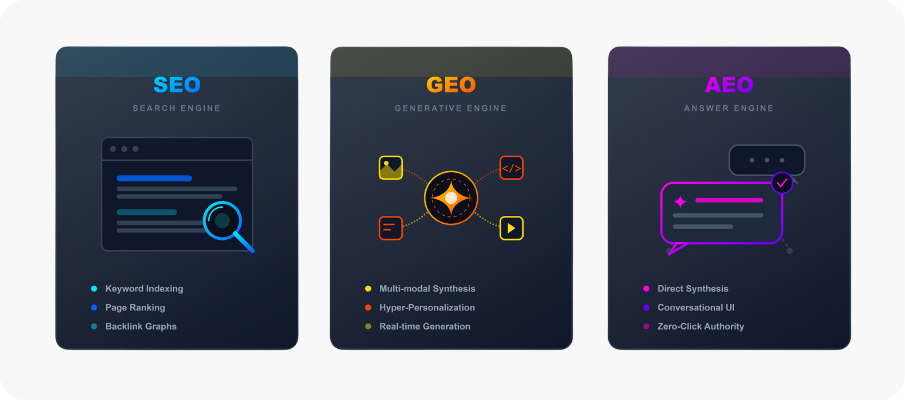
If you've been keeping half an eye on the marketing world lately, you've probably noticed a new alphabet soup floating around: AEO, GEO, and good old SEO.
For years, SEO was the only acronym tourism operators needed to know, now...
