7 Website Design Features That Drive Bookings for Humans and AI
By Michelle Ackers on

We often talk about how tourism websites should be designed with one goal in mind: attract visitors from search engines (mostly Google) and convert them into bookings. While that objective remains the same, the way travellers discover and interact with tourism businesses is changing rapidly.
With AI-powered search experiences becoming increasingly common, travellers are no longer simply clicking through lists of search results. They're asking questions, receiving recommendations, comparing options, and planning itineraries directly within AI tools like ChatGPT, Gemini, Google AI Mode/Overviews, Perplexity and more.
Given this, your website has three audiences to consider:
- Human visitors looking to book
- Traditional search engines
- AI search tools looking to understand and recommend your business
We know there are key aspects still needed for your website: like being mobile-friendly, fast loading, having inspiring imagery, and strong calls to action, they're all mandatory - but now there's the added factor of catering for AI search.
Here are seven website design features that will help your tourism businesses attract more visibility, build trust, and drive more bookings.

1. Content Designed for Answer Engine Optimisation (AEO)
SEO is no longer enough, you also need to focus on "Answer Engine Optimisation" (AEO) to help your content appear in AI-generated responses and search summaries.
To improve your AEO readiness:
- Answer specific traveller questions directly
- Create destination guides with useful travel advice
- Develop detailed FAQs (you'll see more about this below)
- Use conversational language, people write their AI enquiries in their own conversational phrases and terms
- Cover topics comprehensively
- Maintain regular updates with accurate information
Websites most likely to be cited by AI search tools are those that consistently provide helpful and trustworthy content. Rather than chasing keywords alone, focus on becoming the best source of information for your audience.
2. Comprehensive FAQ Sections
One of the biggest opportunities for tourism businesses is creating content that directly answers traveller questions. AI search tools favour content that is clear, helpful, and structured around typical questions a traveller may ask in their planning and booking phases.
Think beyond basic questions like "What time do you open?" and consider:
- Are there restaurants within walking distance?
- What should I bring on the tour?
- Is this experience suitable for young children?
- What happens if the weather is bad?
- What if I get motion sickness, do you think I can still do this activity?
- How fit do I need to be?
- What's the best time of year to visit?
These types of questions often appear during the planning phase of a trip and are exactly the kind of content AI search tools are seeking when generating answers. Well-written FAQs not only improve the customer experience but can significantly increase your visibility in AI search results.
3. Experience-Focused Content
Many tourism websites still rely on generic product descriptions. Today's travellers want more context, and AI search tools need more information. Instead of simply describing what your tour includes, explain:
- Who the experience is best suited for
- What visitors can expect to feel and experience
- What makes your offering unique
- How it compares to alternatives
- Why travellers consistently choose it
What not to say (generic description):
"Join our guided wine tour and visit three premium wineries. Enjoy tastings, local food and beautiful scenery."
What to say (rich, AI-friendly description):
"Perfect for couples and food-and-wine lovers seeking a relaxed, authentic day out, our small-group wine tour takes you beyond the cellar door. You'll meet local winemakers, enjoy exclusive tastings not available to the general public, and discover the stories behind the region's most celebrated wines. Unlike larger coach tours, groups are limited to 10 guests, creating a more personal and immersive experience. Travellers consistently rate this tour highly for its knowledgeable guides, genuine local connections and unhurried pace."
The richer and more detailed your content, the easier it becomes for AI search tools to understand and recommend your business. Think of your website as teaching both travellers and AI why your experience matters.
4. Strong Brand Storytelling
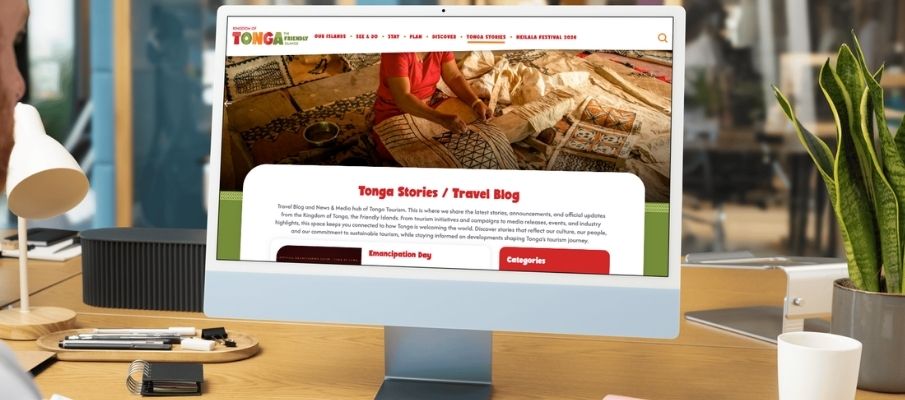
As AI-generated answers become more common, your brand story becomes increasingly important. Why? Because travellers still make decisions based on trust and emotional connection.
Your website should clearly communicate:
- Who you are & why your business exists
- The people behind the experience
- Your connection to place
- Your values and expertise
Strong storytelling helps differentiate your business in a market where many products may appear similar at first glance. AI can summarise information, but it cannot replace authentic stories that create emotional engagement. Here's your guide to Storytelling for Tourism.
5. Structured Content That AI Can Understand
In the past, website design focused heavily on visual appeal. Today, structure matters just as much. AI tools prefer content that is:
- Clearly organised with clear page hierarchies and well-organised information architecture
- Written using natural language with descriptive page titles, supported by sub-headings that are questions
- Broken into logical sections with simple navigation, and are easy to scan
A beautiful website is valuable and effective once people are visiting your website, but if AI cannot easily interpret the content, you may miss visibility opportunities.
6. Build Trust in Your Customer Journey
Trust remains one of the strongest booking drivers in tourism. Travellers are often making high-value purchasing decisions based on limited information.
Your website should make trust visible through:
- Customer reviews and testimonials
- Industry awards
- Certifications and accreditations
- Media mentions
- User-generated content
- Partner logos
- Safety information
AI search tools also use many of these trust signals from external sources when assessing the authority and credibility of businesses online. The stronger your digital reputation, the greater the likelihood of being recommended.
7. Ensure Fast & Smooth Booking Experiences
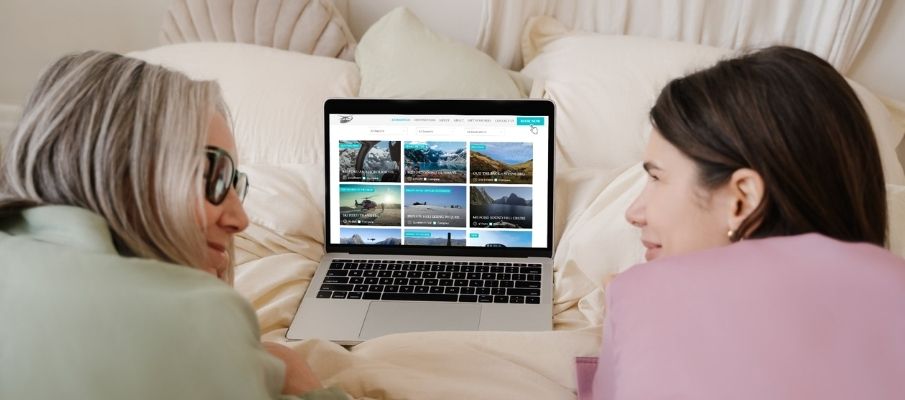
The most effective tourism websites remove barriers to booking. Visitors should be able to quickly understand availability and pricing, inclusions, cancellation policies, and booking options. Don’t hide your pricing, the user shouldn’t have to check availability to find out what your price is.
Complicated booking journeys create drop-off. As travellers become accustomed to AI-assisted planning and booking experiences, expectations around convenience will only continue to increase.
Reducing clicks, simplifying navigation, and streamlining checkout processes can have a significant impact on conversion rates, this is where expert User Experience (UX) design comes in. In addition, when choosing your booking engine provider, make sure you consider the ease of the checkout and payment process as a key requirement.
Your Website Has to Evolve
Tourism websites are no longer just digital brochures, they have become knowledge hubs, trust builders, and booking engines all at once. As AI reshapes how travellers discover information, businesses that create helpful, structured, and authoritative content will be best positioned to succeed.
The goal is no longer simply to rank in search results, it is to become the source that search engines, AI assistants, and travellers trust enough to recommend. In tourism, trust has always been one of the most powerful drivers of bookings.
To learn more about SEO for AI search, check out our guide written for tourism.
If you need help with planning and implementing your AI Search strategy, get in touch for a chat!
Listen to Sound Advice About Enhancing Website for AI & Humans
ABOUT THE AUTHOR
Michelle Ackers | Brand Marketing Manager
Read more articles
Marketing Mythbuster #8: You need to be on every social media platform
By Tomahawk |
At the beginning of 2026, this seemed like a pretty straightforward myth to bust - "You don't need to be on every social media platform."
Trying to maintain a presence on Instagram, Facebook, Instagram, TikTok, YouTube,...
Tomahawk Launches Sound Advice for Tourism
By Tomahawk |
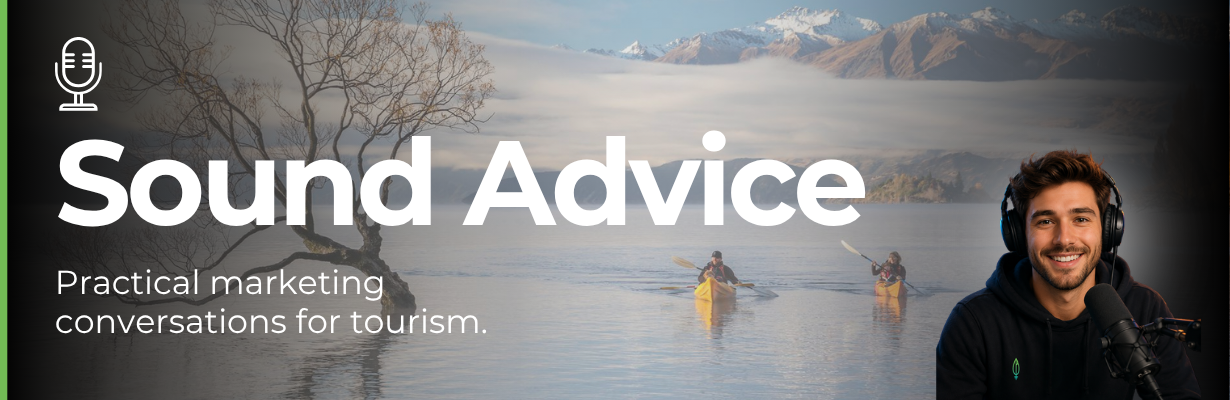
We have officially welcomed our newest team member, Chip, an AI-generated T-Hawk with a smooth voice and endless enthusiasm for tourism and digital marketing. Well...technically he isn't that new. Chip was assembled somewhere in...
